Cobbling Together a Better Understanding of Men’s Dress Shoes
“A shoe is not only a design, but it’s a part of your body language, the way you walk. The way you’re going to move is quite dictated by your shoes.”
– Christian Louboutin (Shoe fashion designer, pop culture brand icon)
Understanding the array of designs available for the men’s dress shoe – whether it is a luxurious Swiss Bally or the more ordinary domestic Stacy Adams – plays an important part in a Gentleman’s appearance, comfort, and his command of style.
My father sold men’s shoes for more than 40 years. Right out of the US Army, he worked as a salesman carrying valises full of the latest samples traveling by car or by train to major cities throughout the eastern US, as a retailer in three notable Washington DC locations, and as a private store owner. And although I was tutored in the corresponding design features and distinctions of men’s dress shoes, I am not convinced that men really understand the nuances. Unlike the ever-expanding cosmos of women’s shoes, the patterns for men’s styles are fairly limited and really seem to be only derivatives of two or three base designs. As a result, this should make for a relatively easy discussion. I urge you to sally forth, Gentleman, so that you may better understand the Stylings and utilities of the men’s dress shoe.
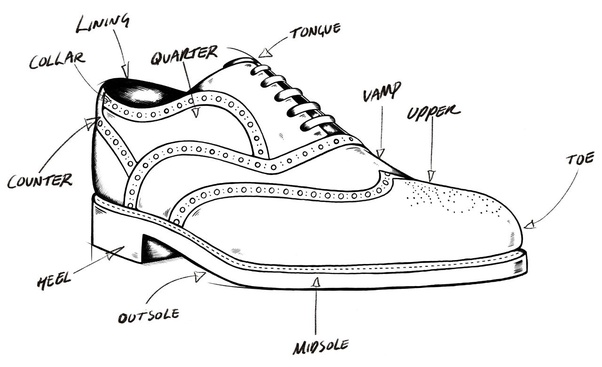
Before we explore style, you must first understand the components that make up the dress shoe. From the front to the back, the design elements of a men’s dress shoe consists of five parts: the toe, the vamp, facing, the quarter and the counter. It is the arrangement, construction and stitching of these five pieces which determine the style and nomenclature associated with the shoe.
The Oxford
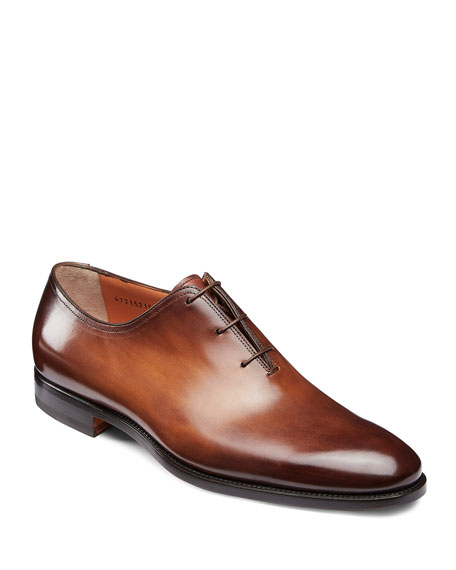
The Oxford (or a Balmoral as it is known in the UK) is the most basic of men’s dress shoes; but that is not to say that they are “basic” in an urban dictionary sort of way. This sleek shoe is identified by its “closed” lacing style (or facing) and its unibody construction – as it is traditionally made from one piece of leather. The closed style means that the eyelet flaps on top of the shoe are stitched over the vamp, limiting the flap’s movement, while also providing a slim silhouette. So, if you have massive Fred Flintstone feet – as I do – this look offers a slimming touch for footwear. We recommend that you go with leather, rather than a suede, if the goal is to streamline the appearance of your hoof.
The Derby
Prior to today, most gentlemen would confuse the Derby with the Oxford. But you won’t.
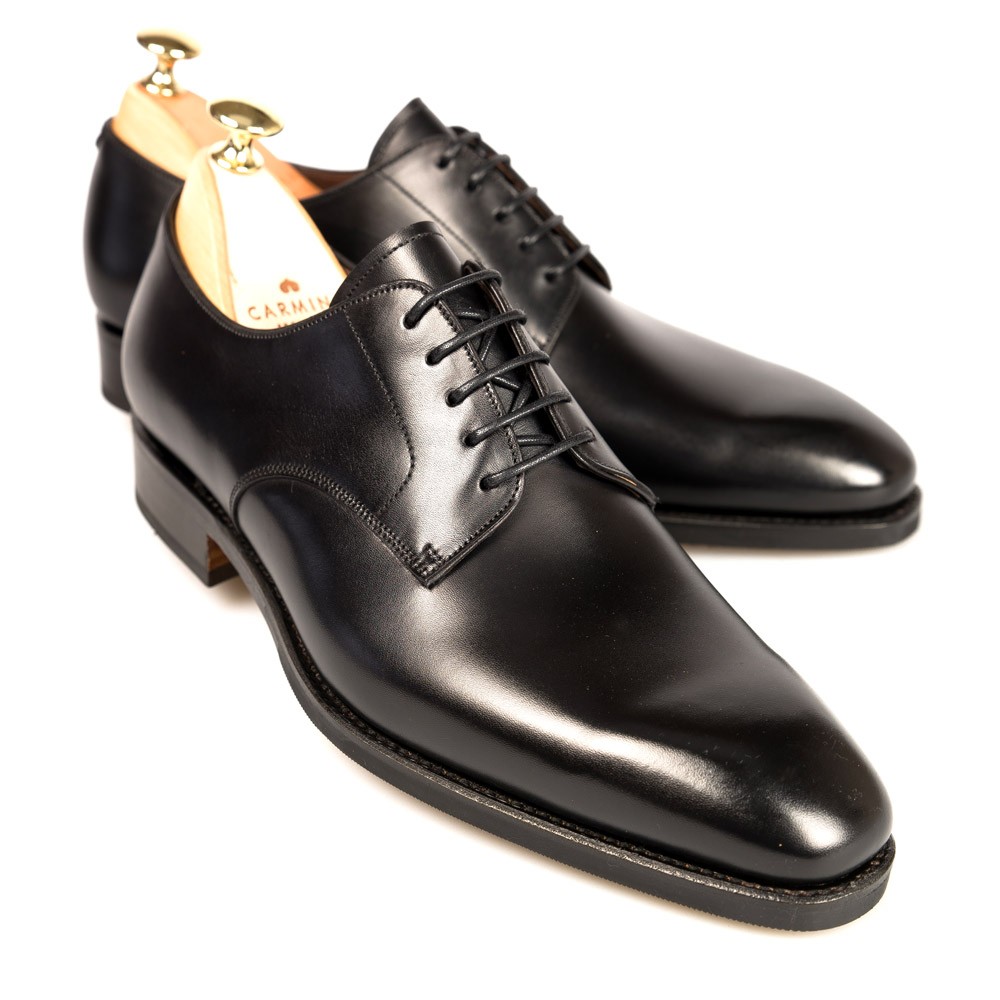
Rather than having a closed lacing system like the Oxford, the Derby uses open lacing with the flaps being sewn under the vamp and not connected at the front of the shoe. This subtle difference ensures that the lacing flaps are capable of movement and allows for a wider fit for the 4E contingent. Whereas the Oxford appears to be one continuous structure, the Derby – when laced – looks as if it is segmented with the toe, vamp, quarter, heel cap and counter elements. You can wear Derby shoes the way you would Oxfords – again, in suede or leather; however, Derbys are typically more casual. A Gentlemen would not sport a Derby with a formal suit; rather, khakis, chinos or jeans coordinate well with the Derby.
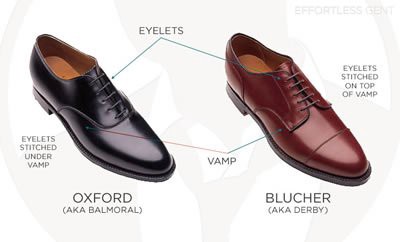
Although the uninformed would suggest that the Derby and its fraternal twin, the Bulcher, are the same shoe style, they are not. The Derby is differentiated from the Bulcher to the extent that the Bulcher connects the two sides of the lacing flap onto the vamp. Gents, if you have come this far, you might as well understand all of these subtleties.
Where The Brogues Fit In
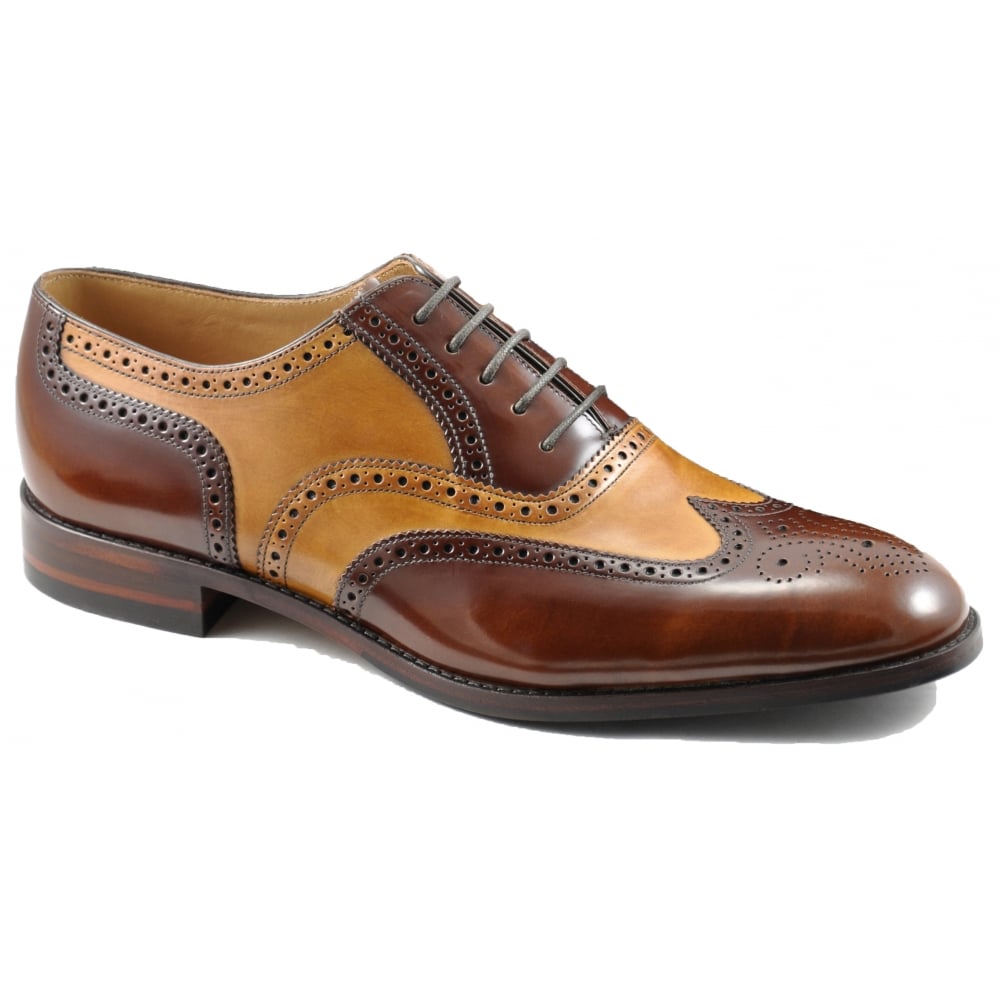
Now things start to get interesting… A brogue is truly a subset within the Oxford/Derby tree rather than a stand-alone shoe type although shoes with broguing do maintain a more formal flair. Broguing refers to the decorative perforations punched along the edge of the leather overlapping the vamp. There are also different types of Brogues which then populate the varieties within the Oxford and Derby designs. (A little history… broguing perforations were intended to allow water out of shoes when crossing wet terrain.)
- A Full Brogue or Brogue
A full brogue is really your classic wing-tip shoe where the perforations follow the letter “W” on the center of the top of the shoe and sweep around the sides of the shoe.
- A Half Brogue (Semi Brogue)
A half brogue provides for some perforations on the edge of the toe cap, but the design is a more limited decorative pattern (or medallion) in the center of the toe cap. This is more subtle than a full brogue.
- A Quarter Brogue
Like the half brogue, but instead of a specific design on the top, the toe cap perforation is more limited consisting of decorative broguing along the seam of the cap toe, with no decoration on the center of the cap toe.
- The Cap Toe
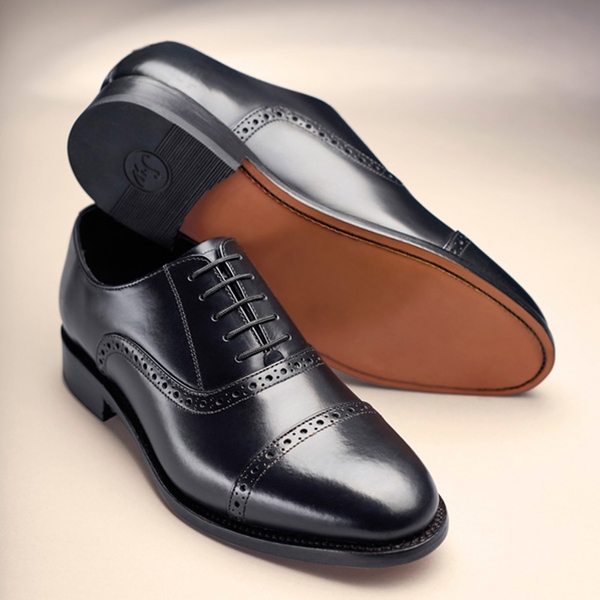
Cap toes feature a stitched line across the vamp that provides a striking horizontal cap to the shoe. In most cases, a separate piece is stitched over the vamp.
For the Fashionistos: The toes of your dress shoes should be rounded – never squared or pointy.
The Monk Strap
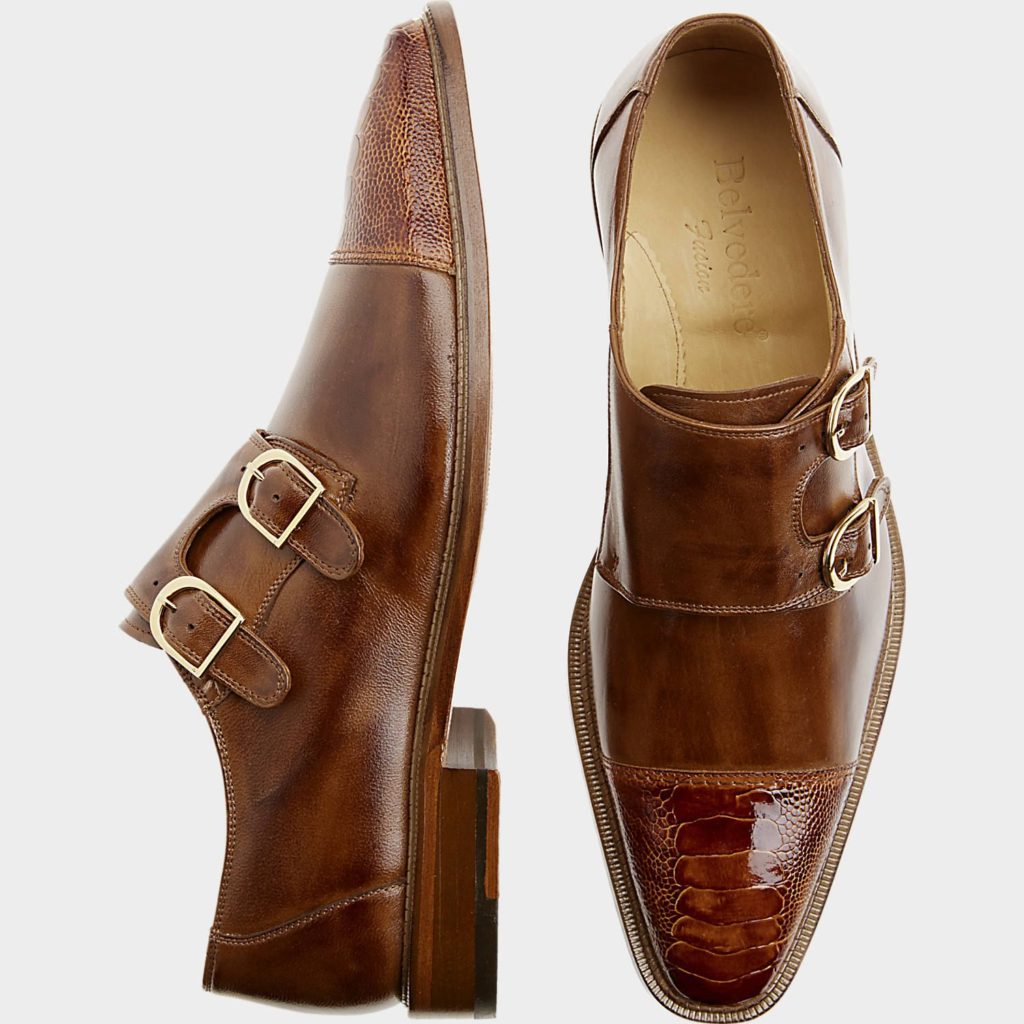
On the formality continuum, the Monk Strap is a lace-less shoe that is more high-brow than the Derby but less formal than an Oxford. As you can see in the photo, this is where the second true classification of men’s footwear takes hold. The Monk Strap – similar in shape and construction to an Oxford – uses a strap and a buckle rather than laces. When the construction employs a broader strap with two buckles, the shoe is called a Double Monk.
Monk strap shoes are often crafted out of leather or suede and will sometimes have decorative broguing. The monk strap is presently regarded as a versatile shoe that can be worn with any pair of slacks from jeans to suits pants.
The Loafer
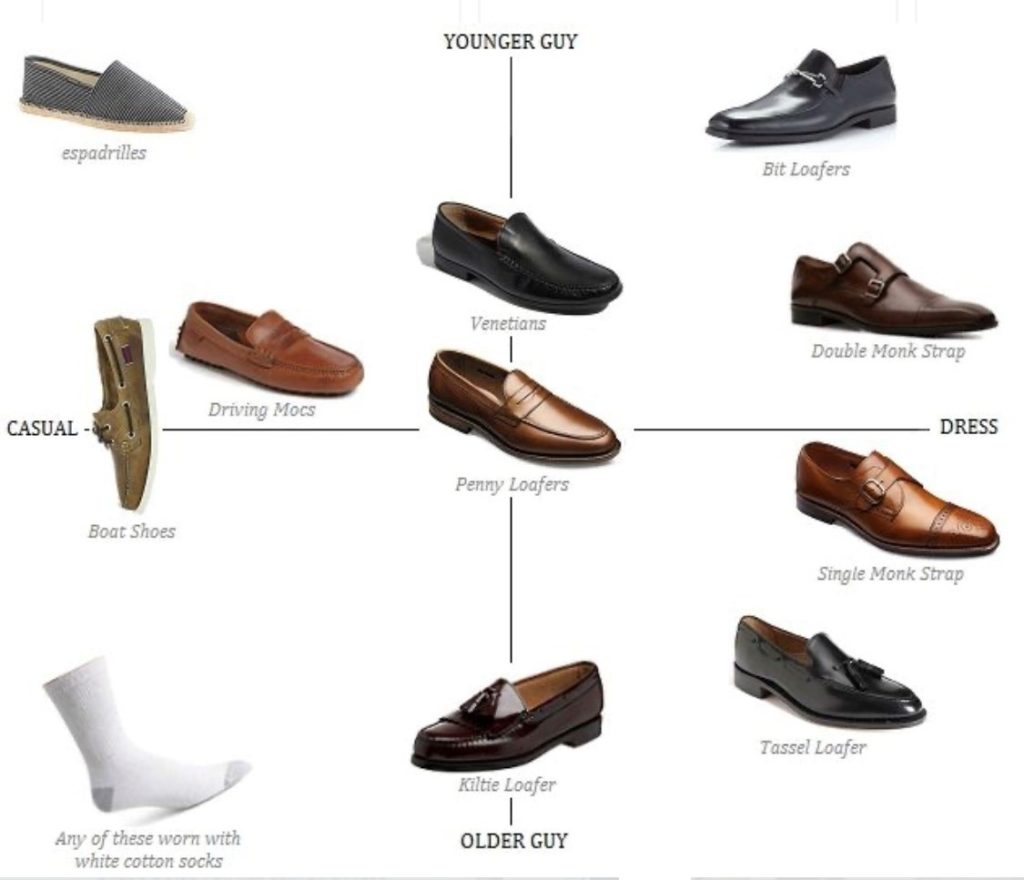
Identified by its wide heel and slip-on capabilities, the Loafer comes in a variety of lace-less styles (Venetians, Kiltie’s, tassel, penny loafer, monk strap, and bit). Regardless of style, when it comes to the various types of men’s shoes, Loafers are generally considered to be the most casual. Loafers often have a saddle — a decoration that might be a plain strap, a strap with a slit (as with penny loafers), or a metal ornament. Tassels or a kiltie might hang from a saddle, while the minimalist loafer (the Venetian) has an exposed vamp without any embellishment or ornamentation.
For the Fashionistos: In 1966, Gucci introduced the bit loafer, which features a metal strap (in the shape of a horse’s bit) across the instep. Gucci’s chain addition fostered the Loafer’s move up the formality continuum.
*Men’s Dress Boots have a similar interrelated design spin-off structure – we will reserve that discussion for another day.
Armed with this analysis, you are now ready to talk with your local men’s dress shoe purveyor with a bit more confidence and substance. That’s what we are here for.
For now, pour yourself a Blanton’s neat, sit back, reflect upon your newfound mastery of dress shoe styles, and contemplate your footwear needs.
This article could not have been more timely as I have an important function to attend, but was unsure of my shoe options. Now I know what I should be pairing with my attire. Kudos and my gratitude.
Glad to be of service, old sport.